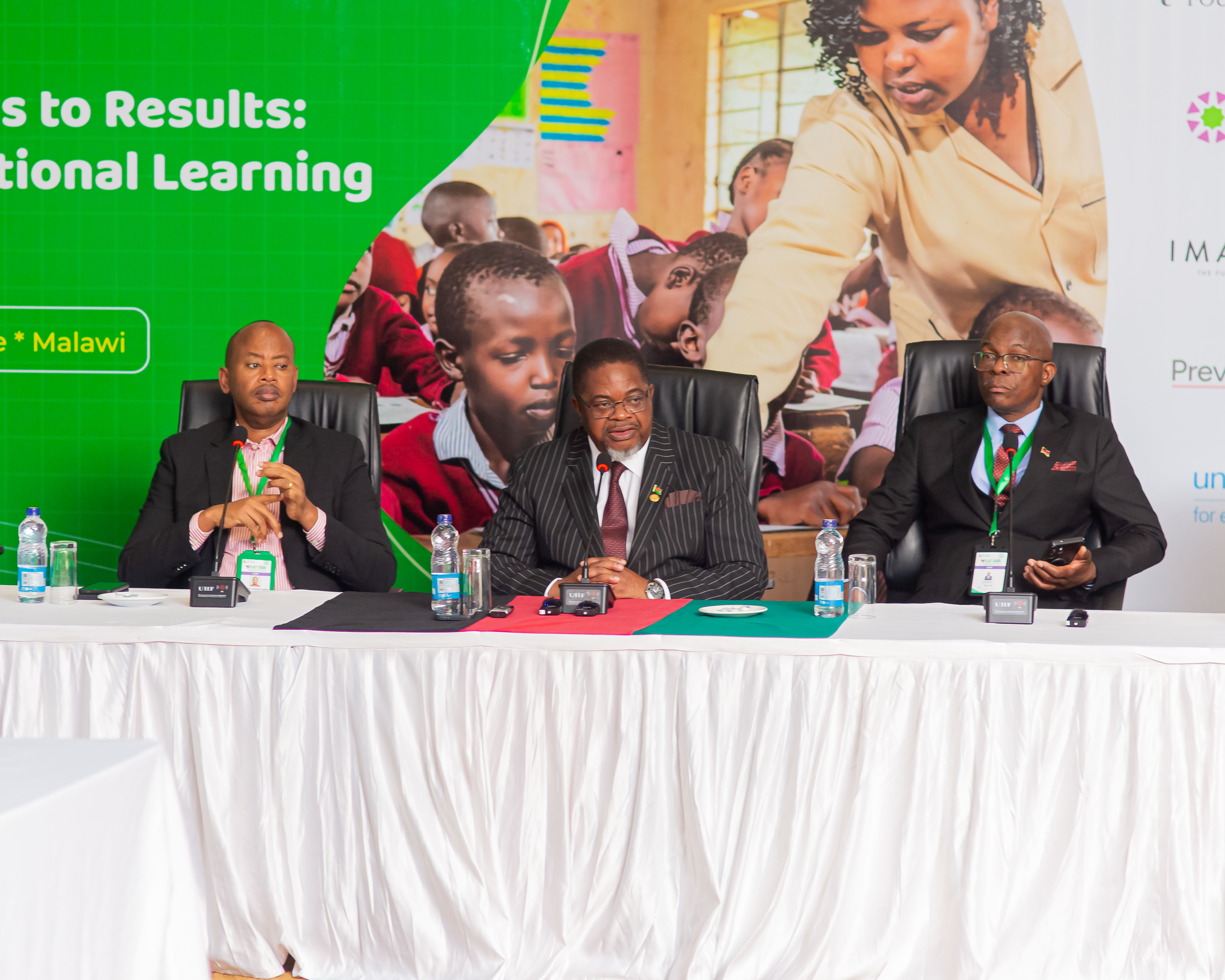
African countries have pledged to place foundational learning at the centre of their education agendas, as the third Africa Foundational Learning Exchange (FLEX2026) concluded in Malawi with a renewed commitment to move beyond discussions and pilot programmes towards practical action that will improve learning outcomes for children across the continent.
Speaking during the closing ceremony of FLEX2026 on Friday, Minister of Education, Science and Technology Honourable Bright Msaka, SC, said the priority now should be on strengthening education systems that can deliver measurable results he emphasised the importance of reliable data, effective assessment and strong accountability mechanisms to ensure that investments in education are directed towards areas that have the greatest impact on learners.
Msaka said governments must also establish sustainable financing and governance structures that ensure resources allocated to education translate into improved learning experiences in classrooms.
ADEA Executive Secretary Albert Nsengiyuva said the outcomes of FLEX2026 had provided a clear roadmap for countries to transition from the pilot phase to full implementation of foundational learning programmes.
He said greater emphasis must be placed on approaches that respond to learners’ needs, including the use of local languages in early grade education, to help improve learning outcomes and address learning poverty across Africa.
FLEX2026 brought together more than 600 education leaders, policymakers, researchers, development partners and practitioners from over 40 African countries to strengthen collaboration and accelerate efforts towards improving foundational learning outcomes and ending learning poverty by 2035.